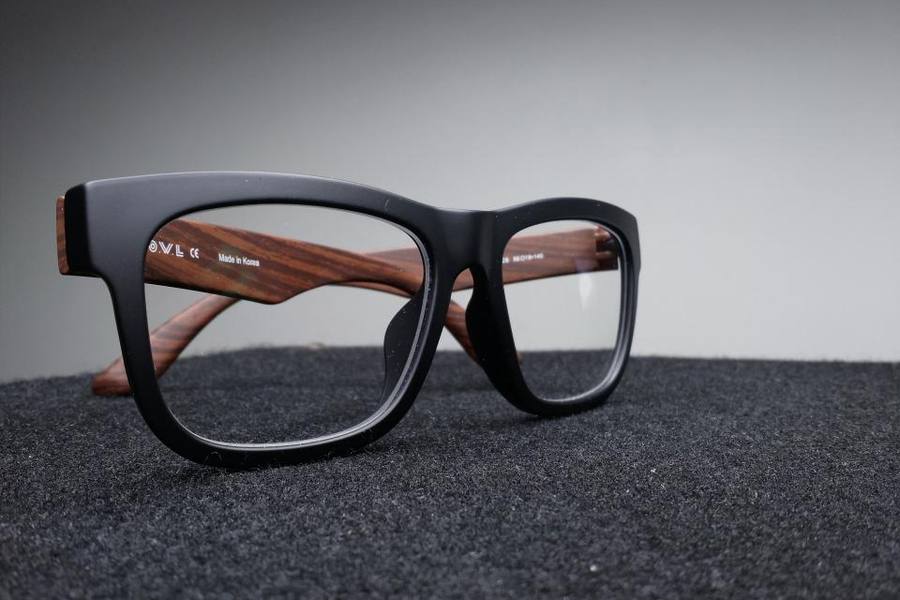
Prescription Sunglasses
Representative image (stock photo); not the exact product.
The Alternative Is Squinting
Anybody who needs correction and wears non-prescription sunglasses is choosing between seeing clearly and not squinting, and usually gets neither.
Squinting in bright light is tiring, causes headaches, and does not actually correct vision, and the habit is entirely avoidable with prescription lenses.
Clip-ons and fit-overs exist and are cheaper and considerably more awkward, adding bulk and an extra surface to reflect and scratch.
Tint Is Separate From Prescription
The tint and any polarisation are applied to a lens made to your prescription, which means both specifications need choosing deliberately.
Tint darkness affects comfort in different conditions, with a mid tint suiting general use and a very dark one suiting only strong sunlight.
Polarisation is worth having for driving and water, with the usual caveats about LCD screens and road ice.
Lens Material And Thickness
Stronger prescriptions produce thicker lenses, which in a sunglass frame is more visible than in clear glasses because the edge catches light.
High index materials reduce thickness at additional cost, and choosing a smaller frame also reduces edge thickness meaningfully.
Wraparound frames with strong curvature are difficult or impossible to make in some prescriptions, which is worth establishing before falling for a particular frame.
Coatings Worth Having
An anti-reflective coating on the back surface reduces the reflections that bounce off the inside of the lens into your eye from behind, which is a real annoyance on tinted lenses.
Scratch-resistant coating matters because sunglasses live in bags and cars and get handled carelessly more than clear glasses do.
Mirror coatings on the front reduce transmitted light further and are a cosmetic choice as much as a functional one.
Lens replacement is worth asking about before buying a frame, because a good optician can reglaze most frames with new lenses later at considerably less cost than a complete new pair. A frame that is discontinued or built so that lenses cannot be replaced without damaging it removes that option, which for an expensive pair expected to last through several prescription changes is a meaningful long-term consideration.
Cost And Ownership
Prescription sunglasses cost considerably more than off-the-shelf ones, and they last as long as the prescription does and can be reglazed later.
That makes them a poor candidate for losing, and a case and a habit of using it are more important than with cheap sunglasses.
Photochromic lenses in ordinary frames are the alternative for anybody who would rather not manage two pairs, with the driving limitation noted elsewhere.
Progressive lenses in sunglasses are worth a specific mention for anybody who wears them in their clear glasses, because switching between a progressive and a single-vision pair means relearning where to look every time you change. Keeping the same lens design in both pairs avoids that adjustment entirely, and the alternative of a single-vision sunglass pair means near vision is uncorrected outdoors, which matters for reading a menu on a terrace or a map on a walk.
The Verdict
The correct answer for anybody who needs correction and spends time in bright light, removing the squinting compromise entirely.
They cost considerably more, strong prescriptions produce visible edge thickness, and wraparound frames may not be possible.
Confirm your prescription can be made in the frame you want. Strong prescriptions and heavily curved wraparound frames often do not combine.
At a glance
Pros
- Clear vision and sun protection simultaneously
- Removes the squinting that causes headaches
- No bulk or extra reflective surfaces from clip-ons
- Can be reglazed when the prescription changes
Cons
- Considerably more expensive than off-the-shelf
- Strong prescriptions produce visible edge thickness
- Wraparound frames impossible in some prescriptions
- A second pair to manage and not lose
Frequently asked questions
Why not just use clip-ons?
They work and they add bulk, an extra surface to reflect and scratch, and a fiddly attachment. Prescription sunglasses are cleaner optically and more pleasant to use, at considerably more cost.
Can I get any frame?
Not necessarily. Wraparound frames with strong curvature are difficult or impossible in some prescriptions, and stronger prescriptions produce thicker lens edges that show more in a tinted lens. Establish that before choosing a frame.
Which coatings matter?
Anti-reflective on the back surface, which stops reflections bouncing off the inside of the lens into your eye from behind — a real annoyance on tinted lenses. And scratch resistance, since sunglasses get handled far more carelessly than clear glasses.
Specifications
| Type | Prescription tinted lenses |
| Alternative | Clip-ons and fit-overs, more awkward |
| Tint | Separate choice from prescription |
| Polarisation | Optional; usual screen caveats |
| Thickness | Reduced by high index or smaller frames |
| Wraparound | Limited by prescription strength |
| Coatings | Back anti-reflective and scratch resistant |
| Alternative approach | Photochromic lenses |
The bottom line
Removes the squinting compromise entirely. Confirm your prescription works in the frame you want before committing.
Check Price on Amazon